Connection before correction
Good practice guidance
This page is good practice guidance. It is not policy and it does not set out a statutory requirement. It is here to support the learning and practice of everyone at Sparks Fostering.
This page explains the order to work in, which consequences help and which make things worse, how to put the relationship right afterwards, and why nurture and play are part of the work.
The main points
- Deal with the upset first and the behaviour afterwards.
- The boundary stays where it was. You are only changing when you talk about it.
- Many ordinary consequences don’t work with the children we look after, and some make things worse.
- What you do to put the relationship right afterwards teaches more than the consequence.
- Play and nurture are part of the work and should not depend on behaviour.
- If something is happening right now, look it up in Common challenges: an A–Z.
The order to work in
Why an upset child can’t learn.
A child who is frightened or very angry can’t learn from what they did. The order is always safety, then calm, then the conversation.
- Safety means nobody is being hurt and nothing dangerous is happening. This is the only part that can’t wait.
- Calm means the child’s body has settled and they can hear you. It takes longer than most people expect.
- The conversation about what happened comes last, and sometimes the next day.
Boundaries still matter.
The rules in your home stay the same. Hitting is not allowed, and neither is breaking things or hurting the pets. What changes is when you deal with it.
Children who have had chaotic lives need boundaries more than other children. Aim to be warm and firm at the same time.
What works and what makes things worse
What makes things worse.
- Withdrawing affection. Going quiet or not saying goodnight confirms to a child who has been rejected that being loved depends on behaving.
- Consequences a long time after the event, such as no screens for a week. The child can’t link the two, and you are left enforcing it all week.
- Sending a child to their room as a punishment. It removes the person who might have settled them. A child who chooses to go to their room to calm down should be left to it.
- Taking away what calms them, such as the tablet or the football. It makes the next incident more likely.
- Bigger threats. If you don’t carry it out, the child learns that you don’t mean what you say.
Consequences that do work.
- Connected to what happened. Milk thrown on the floor gets wiped up.
- Immediate, or as close to it as you can manage.
- Small. A small consequence you carry out teaches more than a big one you abandon.
- Explained once, when the child is calm. One short sentence: “You threw it, so we’re going to fix it together.”
- Finished. When the consequence is over, your manner goes back to normal.
The behaviour support policy sets out which sanctions are permitted and which are not.
Rewards and charts.
For a child who can’t yet control the behaviour, a reward chart becomes a daily record of failure on the kitchen wall.
- Reward something the child can actually do, such as “came to the table when I asked”.
- Notice it out loud at the time.
- Praise the effort: “You walked off instead of hitting him. That was hard, and you did it.”
- Never take back something already earned.
- If a chart is making things worse after a fortnight, stop.
Putting things right
Going back afterwards.
Go back to the child once everything has settled, and keep it short:
- “That was a horrible morning. I’m glad you’re here.”
- “I shouted, and I shouldn’t have. That part was mine.”
- “I’ve been thinking about earlier. I’m not cross with you now.”
You go first. Don’t go back over what they did, and don’t ask for an apology, a hug or a promise in return.
When the child will not respond.
If you are told to get out, say your sentence and leave. Some children can accept a note, a favourite drink left out, or sitting in the same room watching something. If a child never lets you near them after an incident, bring that to supervision.
Nurture and play
Nurture every day.
A drink made the way they like it, a blanket on the sofa, a plaster put on properly, a lift or a sandwich for a teenager. Do it whatever the child’s behaviour has been. Nurture is never taken away as a punishment.
Play.
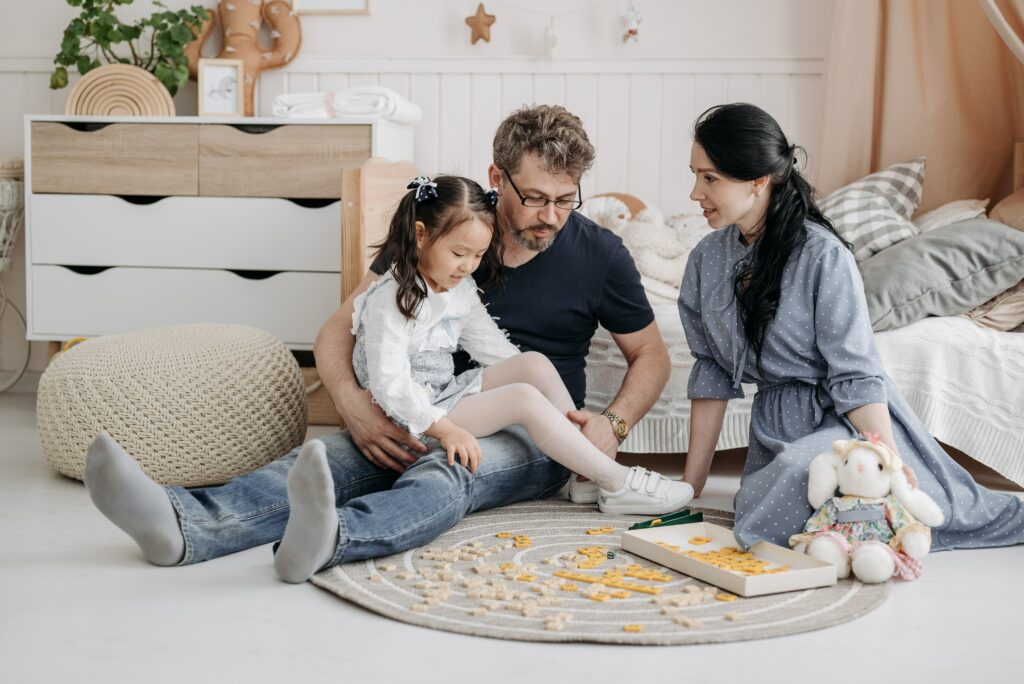
- Short and regular. Ten minutes of cards every evening does more than a day out once a month.
- Let the child choose and follow their lead.
- A child may say something important while you are both looking at a jigsaw.
- Expect it to go wrong at first. Keep going.
Therapeutic games and cards.
Leave a game out and let the child join in. Stop when it stops being fun, and never use a game to get information from a child. If a social worker or therapist lends you a game or book, ask what it is for.
Reading stories together.
Books about feelings or being in care let a child think about a character without having to think about themselves. Don’t point out the similarity. Choose by the child’s developmental age.
Planning fun.
Put enjoyable things in the diary, keep them small enough to go ahead on a bad day, and don’t cancel them as a consequence.